REST API Service overview
The Adeptia platform exposes a REST API service that lets external applications, partners, and systems trigger and interact with your integrations over standard HTTP. By calling published API endpoints, callers can initiate process flows, pass data, and receive responses, all without manual intervention.
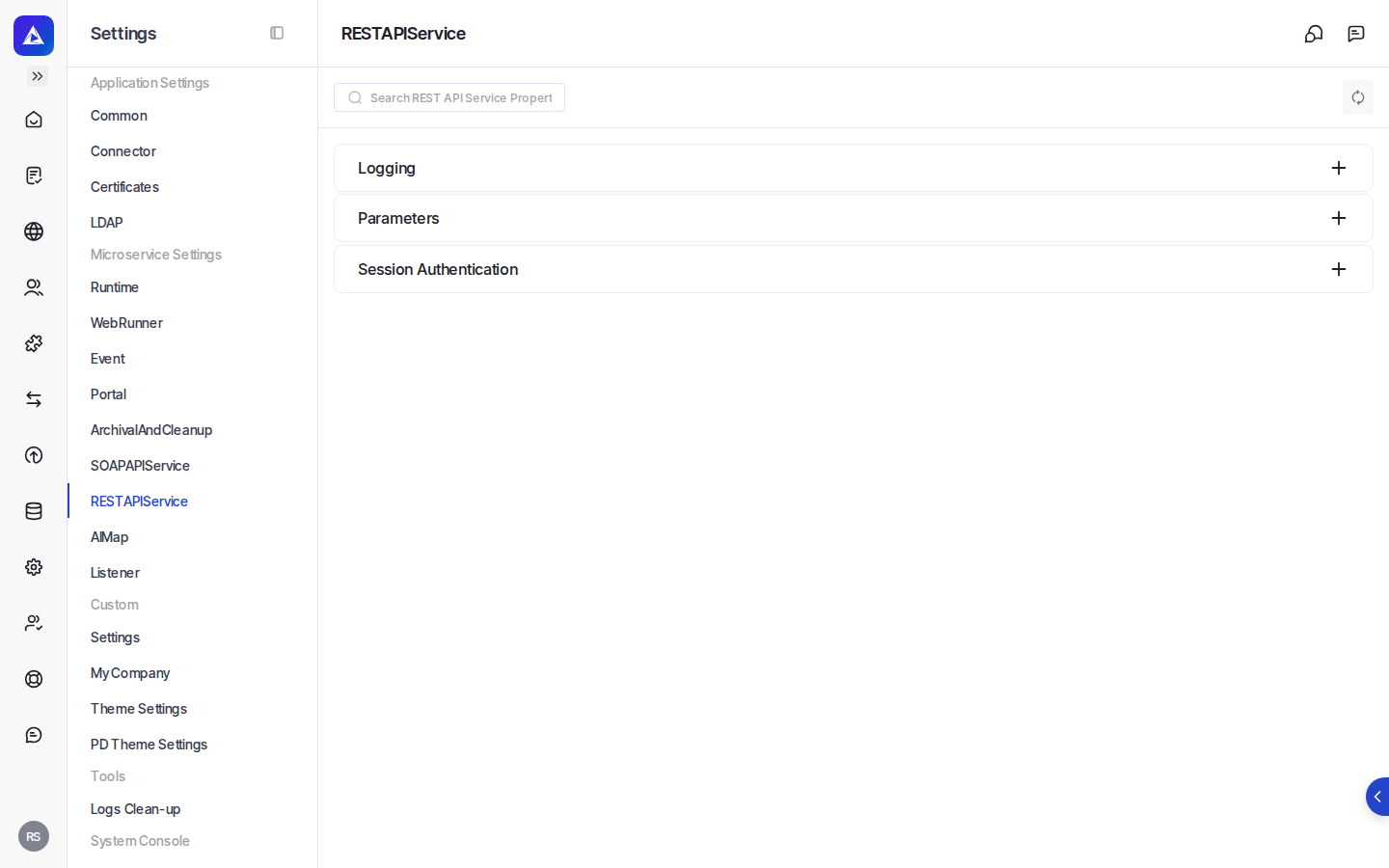
What you can do with the REST API service
The REST API service is the bridge between external systems and the integrations you build in Adeptia. It lets you:
- Expose an integration as a callable API endpoint that external systems can invoke over HTTP.
- Trigger process flows automatically when an inbound request arrives, passing along data as part of the request.
- Use webhook-based integrations, where an inbound HTTP call from a third-party system starts a process flow directly.
- Apply security policies to your published endpoints so that only authorized callers can invoke them.
How requests are handled
Every inbound request goes through a sequence of checks before your integration logic runs.
Validation
When a request arrives, the platform first confirms that it matches a published integration. The platform checks that:
- The endpoint corresponds to a published API or webhook that is currently active.
- The HTTP method used by the caller (for example, GET or POST) is one that the integration allows.
- The integration is in an active, published state; requests to unpublished or inactive integrations are rejected with an appropriate error.
For webhook-based integrations, the platform additionally verifies that the transaction or template being targeted is active before allowing the request to proceed.
Authentication
After validation, the platform enforces any security policy attached to the integration. If a security policy is configured, the caller must satisfy its requirements before the request is processed. Requests that do not meet the authentication requirements receive an error response and are not forwarded to the integration.
Webhook integrations and standard published API integrations each support security policies, giving you consistent access control across both styles of endpoint.
Logging and diagnostics
When API request logging is enabled, the platform records details of each inbound request and its corresponding response. Sensitive information, such as passwords submitted as parameters, is automatically protected and not written to logs in plain text. Each logged request is assigned a unique identifier so that request and response entries can be correlated during troubleshooting.